
Last modified: 2026-03-07 by rob raeside
Keywords: puerto rico | moca | aguadilla |
Links: FOTW homepage |
search |
disclaimer and copyright |
write us |
mirrors
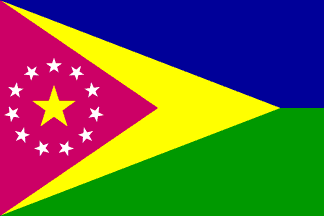 image by Thanh-Tam Le, 12 Febuary 2000
See also:
Here is an image from
pueblos-de-puertorico.com site (defunct) . Moca is in Aguadilla
district, northwest Puerto Rico
Jarig Bakker, 2 Febuary 2000
Moca, which is almost identical to Rincón
, is the one with eleven stars.
Blas Delgado , 6 Febuary 2000
Moca - The purple color represents the Moca tree flower. The
eleven stars stands for the eleven 'barrios' and the central star
stands for the urban zone.
Blas Delgado, 16 April 2001
Designed by the mocano painter Augusto Hernández at the
request of the Bicentennial Pro Commemoration Society of Moca.
The Pro Bicentennial Society approved the design on the 10th of
February of 1972. The Municipal Assembly adopted the flag
officially the 19th of February of 1972, and on June 22nd -Day of
the Bicentennial- the flag was presented to the town with the
Coat of Arms based on the original and prepared in wood by the
mocano painter Valentín Pérez. It has oblong form. Divided in a
silver-plated field and blue sky united by a purple rhombus
(diamond shape), the color of the Moca flower. The rhombus has
within religious symbolisms. The rhombus is surrounded, in its
inferior part, by two branches of the Moca tree; in its superior
part, an arc of eleven silver-plated five-point stars and
simbolizing the eleven wards when Moca was founded. Moca
Municipality si symbolized by gold five-point star. Within the
rhombus is a gold monogram (of the Virgin Mary) topped by a
Christian crown of the same metal. A silver-lined crown in form
of a three-tower castle crowns the shield. On the frontal portion
of the crown, carved in gold, the word Moca. The stones of the
castle are lined in blue. The doors and windows are purple.
Nelson Román, 12 July 2004
 image
by Blas Delgado
image
by Blas Delgado
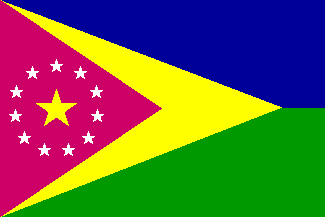
According to Blas Delgado image, the stars are not
rotated. I do not know whether they should be rotated stars .
Thanh-Tam Le , 17 Febuary 2000
mc.gif) image
by Nelson Román, 12 July 2004
image
by Nelson Román, 12 July 2004
A poster shows the flags and descriptions of the barrios of Moca.
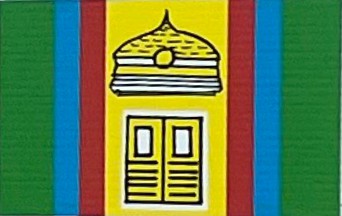 image provided by Carlos
Morales-Ramirez, 8 February 2026
image provided by Carlos
Morales-Ramirez, 8 February 2026
Sus franjas verticales de color verde simbolizan la vegetación espesa de los
mogotes y la producción azucarera. Sus dos franjas azules simbolizan el cielo
claro que predomina en el clima. La cúpula y la ventana son características del
Castillo Labadie, estructura principal de una de las haciendas más importantes
de nuestro pueblo. El color amarillo es el color con el que el Castillo Labadie
ha sido pintado frequentemente. Las dos franjas rojas simbolizan llamaradas de
fuego, en honor a la novela La Llamarada escrita por Enrique Laguerre.
Its vertical green stripes symbolize the dense vegetation of the mogotes
(limestone hills) and sugar production. Its two blue stripes symbolize the clear
skies that predominate in the climate. The dome and the window are
characteristic of Castillo Labadie, the main structure of one of the most
important haciendas in our town. Yellow is the color with which Castillo Labadie
has frequently been painted. The two red stripes symbolize flames of fire, in
honor of the novel La Llamarada written by Enrique Laguerre.
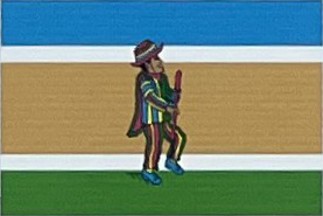 image provided by Carlos
Morales-Ramirez, 8 February 2026
image provided by Carlos
Morales-Ramirez, 8 February 2026
La bandera es de forma rectangular. La franja azul representa el clima
agradable de nuestro barrio. Las franjas blancas representan la flor del árbol
de Capa prieto y el marrón su madera. La franja verde simboliza la tierra
fértil. El enmascarado representa una de las tradiciones más importantes de
nuestro pueblo.
The flag is rectangular. The blue stripe represents the
pleasant climate of our neighborhood. The white stripes represent the flower of
the Capa Prieto tree, and the brown stripe represents its wood. The green stripe
symbolizes the fertile land. The masked figure represents one of the most
important traditions of our town.
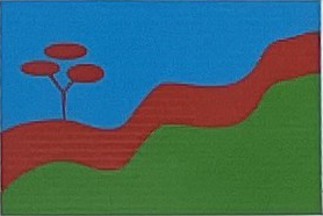 image provided by Carlos
Morales-Ramirez, 8 February 2026
image provided by Carlos
Morales-Ramirez, 8 February 2026
Su campo azul significa el cielo que se aprecia desde el merendero. Su rojiza
franja ondulante significa la carretera que cruza el barrio. El arbol y su color
royo nos demuestran la abunduncia del flamboyan que vemos en el paisaje. El
verde representa los pastos aptos para la crianza do ganado.
Its blue
field represents the sky visible from the picnic area. Its reddish, wavy stripe
represents the road that crosses the neighborhood. The tree and its reddish
color show the abundance of flamboyant trees in the landscape. The green
represents the pastures suitable for raising livestock.
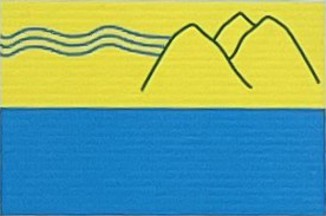 image provided by Carlos
Morales-Ramirez, 8 February 2026
image provided by Carlos
Morales-Ramirez, 8 February 2026
Sus franjas verticales de color verde simbolizan la vegetación espesa de los
mogotes y la producción azucarera. Sus dos franjas azules simbolizan el cielo
claro que predomina en el clima. La cúpula y la ventana son características del
Castillo Labadie, estructura principal de una de las haciendas más importantes
de nuestro pueblo. El color amarillo es el color con el que el Castillo Labadie
ha sido pintado frequentemente. Las dos franjas rojas simbolizan llamaradas de
fuego, en honor a la novela La Llamarada escrita por Enrique Laguerre.
Its vertical green stripes symbolize the dense vegetation of the mogotes
(limestone hills) and sugar production. Its two blue stripes symbolize the clear
skies that predominate in the climate. The dome and the window are
characteristic of Castillo Labadie, the main structure of one of the most
important haciendas in our town. Yellow is the color with which Castillo Labadie
has frequently been painted. The two red stripes symbolize flames of fire, in
honor of the novel La Llamarada written by Enrique Laguerre.
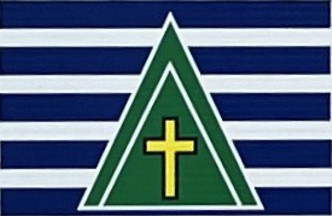 image provided by Carlos
Morales-Ramirez, 8 February 2026
image provided by Carlos
Morales-Ramirez, 8 February 2026
Sus 5 franjas horizontales azul marino significan el cielo nocturno. Las 4
franjas blancas simbolizan la luz de las estrellas que se reflejan en la noche.
Los triángulos verdes significan las montañas donde se localiza nuestro barrio.
La cruz amarilla simboliza la paz y la humildad de nuestra gente.
Its
five horizontal navy blue stripes represent the night sky. The four white
stripes symbolize the starlight reflected in the night. The green triangles
represent the mountains where our neighborhood is located. The yellow cross
symbolizes the peace and humility of our people.
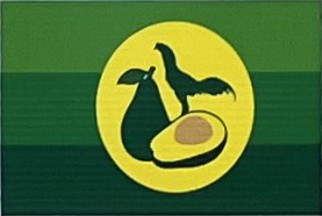 image provided by Carlos
Morales-Ramirez, 8 February 2026
image provided by Carlos
Morales-Ramirez, 8 February 2026
Sus tres franjas horizontales de tres tonalidades de verde, que van en
ascendiencia, simbolizan los tres pisos de nuestro barrio. Su circulo amarillo
simboliza el ruedo donde se enfrentan los gallos. En el centro lleva una silueta
del gallo de pelea y el aguacate que abunda en el barrio.
Its three
horizontal stripes in three shades of green, ascending in height, symbolize the
three floors of our neighborhood. Its yellow circle symbolizes the cockfighting
ring. In the center is a silhouette of a fighting rooster and the avocado tree
that is abundant in the neighborhood.
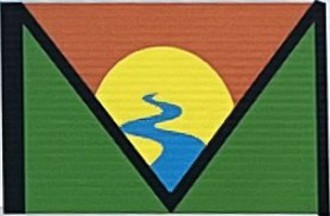 image provided by Carlos
Morales-Ramirez, 8 February 2026
image provided by Carlos
Morales-Ramirez, 8 February 2026
El triangulo anaranjado simboliza los hermosos amaneceres y el atardeceres
que se pueden observar en nuestro barrio. El circulo amarillo representa el Sol
que pinta nuestro paisaje. Los triángulos verdes simbolizan las montañas. El
contorno negro de las montañas marcan la letra M con la que comienza el nombre
de nuestro barrio. La franja ondulante azul representa el rio Culebrinas.
The orange triangle symbolizes the beautiful sunrises and sunsets that can
be seen in our neighborhood. The yellow circle represents the sun that paints
our landscape. The green triangles symbolize the mountains. The black outline of
the mountains forms the letter M, with which our neighborhood's name begins. The
wavy blue stripe represents the Culebrinas River.
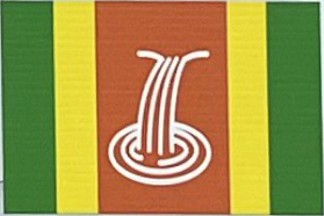 image provided by Carlos
Morales-Ramirez, 8 February 2026
image provided by Carlos
Morales-Ramirez, 8 February 2026
Las franjas verdes representan la espesa vegetación. Las franjas amarillas
representan los rayos del Sol que penetran a través de la espesura. La franja
del centro representa el color de la naranja. La cascada representa uno de los
paisajes más bonitos de nuestro pueblo.
The green stripes represent the
dense vegetation. The yellow stripes represent the sun's rays penetrating
through the thick vegetation. The central stripe represents the color of orange.
The waterfall represents one of the most beautiful landscapes in our town.
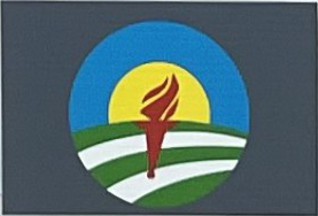 image provided by Carlos
Morales-Ramirez, 8 February 2026
image provided by Carlos
Morales-Ramirez, 8 February 2026
El circulo Amarillo simboliza la vida que nos da el Sol. El fondo plateado es
por el color que da le nombre a nuestro barrio. Las franjas verdes son los
surcos de nuestra abundante agricultura. La antorcha roja representa la gama de
deportes practicados en nuestro barrio. Las franjas blancas simbolizan la
humildad de nuestra gente.
The yellow circle symbolizes the life the sun
gives us. The silver background is the color that gives our neighborhood its
name. The green stripes represent the furrows of our abundant agriculture. The
red torch represents the range of sports practiced in our neighborhood. The
white stripes symbolize the humility of our people.
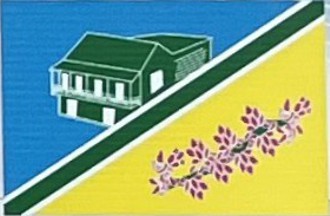 image provided by Carlos
Morales-Ramirez, 8 February 2026
image provided by Carlos
Morales-Ramirez, 8 February 2026
El triángulo azul simboliza el cielo. La casona representa la Hacienda
Enriqueta. La franja verde representa el área de la cuesta de las brujas donde
se encuentra el único bosque urbano de nuestro pueblo. Se muestran las flores
del árbol de Moca sobre un campo amarillo. Estos colores son los que se
encuentran en la bandera de nuestro pueblo.
The blue triangle symbolizes
the sky. The large house represents the Enriqueta Hacienda. The green stripe
represents the area ofthe Witches' Hill, where the only urban forest in our
town is located. The flowers of the Moca tree are shown on a yellow field. These
are the colors found on our town's flag.
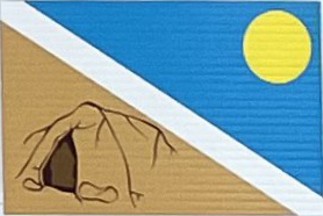 image provided by Carlos
Morales-Ramirez, 8 February 2026
image provided by Carlos
Morales-Ramirez, 8 February 2026
El azul representa el cielo. El circulo amarillo representa el sol que sale
por el este. La franja blanca representa las aguas puras que emanan de los
manantiales. El crema representa la roca caliza pues. Rocha está situada en la
región del carso norteño. La cueva en su entrada luce una silueta de mapa de
Moca.
The blue represents the sky. The yellow circle represents the
rising sun in the east. The white stripe represents the pure waters that flow
from the springs. The cream represents the limestone rock. Rocha is located in
the northern karst region. The cave entrance features a silhouette of a map of
Moca.
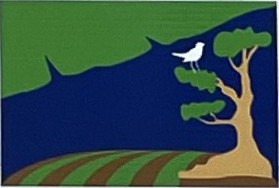 image provided by Carlos
Morales-Ramirez, 8 February 2026
image provided by Carlos
Morales-Ramirez, 8 February 2026
El color verde significa la agricultura. El azul marino simboliza el cielo.
Las franjas marrón simbolizan los surcos de la siembra. El árbol representa la
ceiba centenaria que se encuentra en los terrenos del Club de Leones. La figura
del ruiseñor representa la abundancia de esta ave en nuestro barrio.
The
color green signifies agriculture. The navy blue symbolizes the sky. The brown
stripes symbolize the furrows of the fields. The tree represents the
centuries-old ceiba tree located on the grounds of the Lions Club. The figure of
the nightingale represents the abundance of this bird in our neighborhood.
