- Addorsed
- When two animals are turned back to back – endorsed – but see
addorsed 2) in the main text.
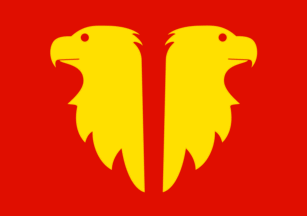
Two Eagle's Heads Erased Addorsed Or, Aure, Norway
- Affronty
- When the head of a beast or a man is shown facing the observer – but see
caboshed (below) and
affronty 2) in the main text (also
respectant and guardant below).
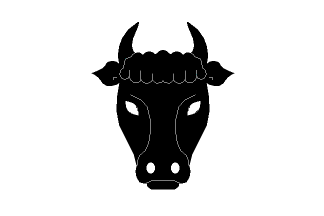
Bull's Head Affronty, Sable, Vilanova d'Escornalbou, Spain
- Armed
- The claws, teeth and beaks of beasts are of a different tincture to the rest of the body.
![[example of armed beast]](../images/v/vx-be-vlg.gif)
Lion Rampant Sable, Armed and Langued Gules, Flanders, Belgium
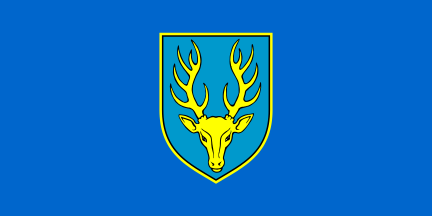
- Caboshed
- When an animal's head is borne full-faced and with no part of the neck visible
– cabossed or cabooched – but see
affronty (above) (also guardant below).
bj-ga.gif)
A Stag Caboshed, Or, Flag and Arms of Garešnica, Croatia
- Contourné
- When an animal is facing towards the sinister rather than the usual dexter – transversed.
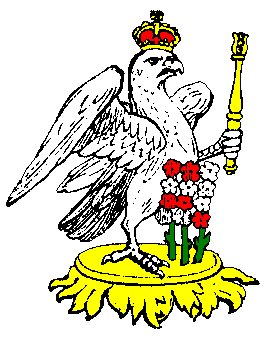
Falcon Proper Contourné (Badge of Anne Boleyn | Parker)
Please note that this term has also been applied (by Scottish heraldic authority) to an inanimate charge
turned towards the sinister, but that such use is unsupported by other sources.
- Couchant
- When an animal is depicted as lying down, with its head generally facing towards
the dexter.
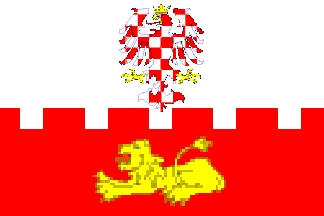
Lion Couchant Or, Uherský Brod, Czechia
- Couped
- Cut off in a straight line as is often the case with the heads and limbs of
animals but see couped main entry (also 'erased' [below]).
![[example of couped]](../images/v/vx-gb-nitud.gif)
A dexter hand couped at the wrist, Northern Ireland, UK
- Coward
- When an animal is shown with its tail between the hind legs.
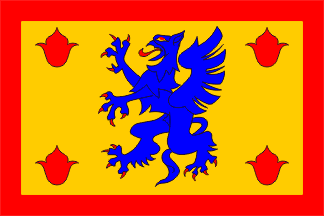
A Griffon Coward, Azure, Armed and Langued gules, Boksburg 1981–94, South Africa
- Displayed
- When an eagle or other winged creature is shown with its wings elevated and sometimes inverted (see
also rising [below], plus vol and
volant in the main text).
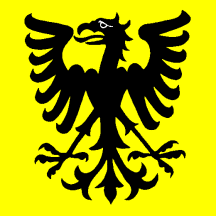
An Eagle Displayed, Sable, Veveyse, Switzerland
- Erased
- As couped, but with the dividing line ragged or uneven.
![[example of erased]](../images/v/vx-be-vbrl2.gif)
Three heads Erased Sable, Lennik, Belgium
- Erect
- When an animal is shown upright or on its hind feet. In certain cases this may be used in place of
"rampant", or may be employed in relation to the heads of animals and fish – but see
erect 2) and upright 2) in the main
text plus haurient and rampant (both below).
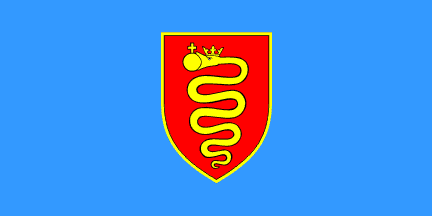
os-go.gif)
Serpent erect or, Flag and Arms of Gorjani, Croatia
- Forcené
- When a horse is seen rearing on its hind legs – but see also rampant
and salient (both below).
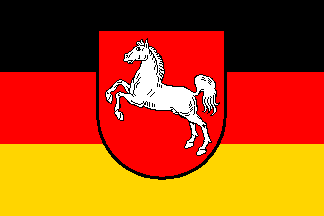
Horse Forcené Argent, Lower Saxony, Germany
- Guardant
- When an animal has its face towards the onlooker – gardant gardant (see also
affronty and caboshed above).
![[example of guardant]](../images/v/vx-duchylancaster.gif)
Three Lions Passant Guardant Or, Armed and Langued Azure, Duchy of Lancaster, UK (Graham Bartram)
- Haurient
- The heraldic term when a fish is in the erect position (see also naiant
and urinant, both below).
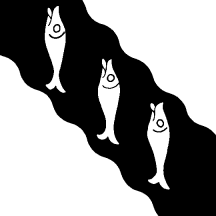
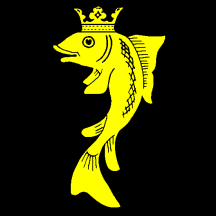
Three Fishes Haurient, Argent, Schwarzenbach, Switzerland;
A Dolphin Crowned Haurient Embowed, Démoret, Switzerland
- Langued
- The tongue of the beast, if shown, is of different tincture than the rest of the body.
![[example of langued]](../images/v/vx-be-voval.gif)
Lion Passant Sable, Armed and Langued Gules, Aalter, Belgium
- Naiant (or natant)
- When a fish (or occasionally a water-fowl) is shown swimming per fess, usually towards the dexter
– natant (see also haurient and urinant on this page).
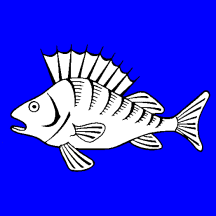
A Perch Naiant Argent, Flag of Auvernier, Switzerland
- Passant
- When an animal is depicted walking on all four paws, or with one paw raised, and generally towards
the dexter – but see trippant below.
![[example of passant]](../images/v/vx-be-vwvbm.gif)
Three Bears Passant, Or, Beernem, Belgium
- Proper/Natural
- When a charge is shown in its natural shape and colours, as opposed to stylised
heraldic colours or shapes.
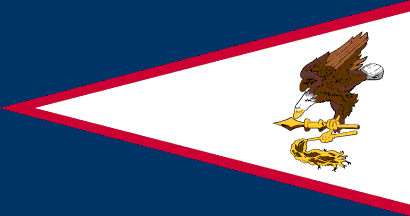
American Eagle Proper, National Flag of American Samoa
- Rampant
- When an animal, particularly (but not exclusively) a lion, is depicted
rearing on its hind legs with forepaws and claws extended – but see
forcené, salient, segreant,
erect (on this page).
![[example of rampant]](../images/v/vx-gb_rscot.gif)
Lion Rampant Gules, Armed and Langued Azure, Royal Banner of Scotland
- Regardant
- When an animal is looking to the rear over its shoulder irrespective of its attitude.
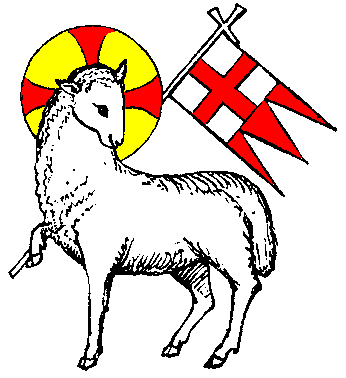
Agnus Dei Proper Regardant (Parker)
- Respectant
- When two animals are depicted facing towards each other – combatant, affrontant or affronté
(but see note below).
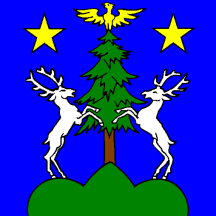
Two Stags Rampant Respectant Argent, Nax, Switzerland
Please note, we suggest that a suitable glossary or heraldic dictionary be consulted before using this
and the alternative terms given above, however, please note also that the terms affrontant and affronty
have different meanings – see affronty [above]
and affronty 2) in the main text.
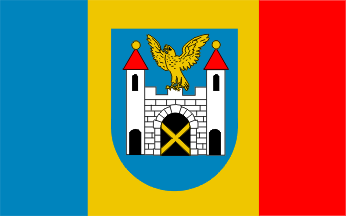
- Rising
- When a bird is represented as in the act of taking flight (see also displayed
[above], plus vol and volant
in the main text).
zl.gif)
An Eagle Rising, Or, Złocieniec, Poland
- Salient
- When an animal is shown leaping (possibly upon its prey), or rearing up with both hind feet on the
ground, and its forepaws drawn as if level with each other – but see
forcené and rampant (both above).
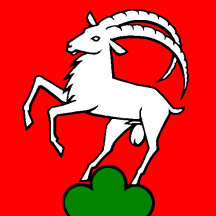
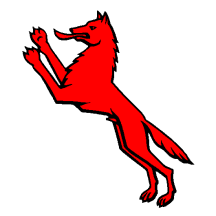
Ibex salient Argent, Remigen, Switzerland;
Wolf salient Gules, Frick, Switzerland
- Segreant
- Used in place of rampant when applied to a griffon whose wings are generally expanded – see
rampant above.
A Griffon Sergeant Azure, Armed and Langued Gules, Flag of
Boksburg, South Africa 1981–1994
- Statant
- When an animal is depicted on all four feet standing still whilst facing the dexter.
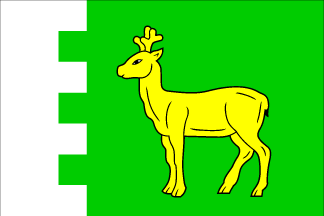
Roebuck Statant Or, Morkov, Czechia
- Trippant
- When a beast of the chase (a stag, hart, buck etc) is depicted walking on all four hooves, or with
one hoof raised, and generally towards the dexter – but see passant above.
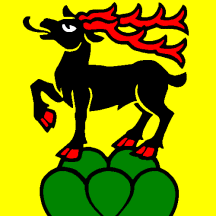
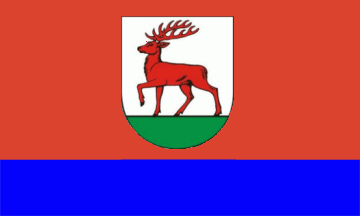
Stag Trippant Sable, Attired and Hoofed Gules, Rebévelier, Switzerland;
Stag Trippant Goules, Rzepin, Poland
- Urinant
- When the head of a fish points downward (see also haurient and
naiant above).
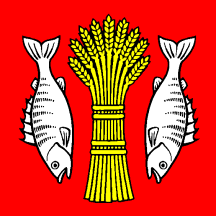
Two Perches Urinant, Argent, Rorschach, Switzerland
